

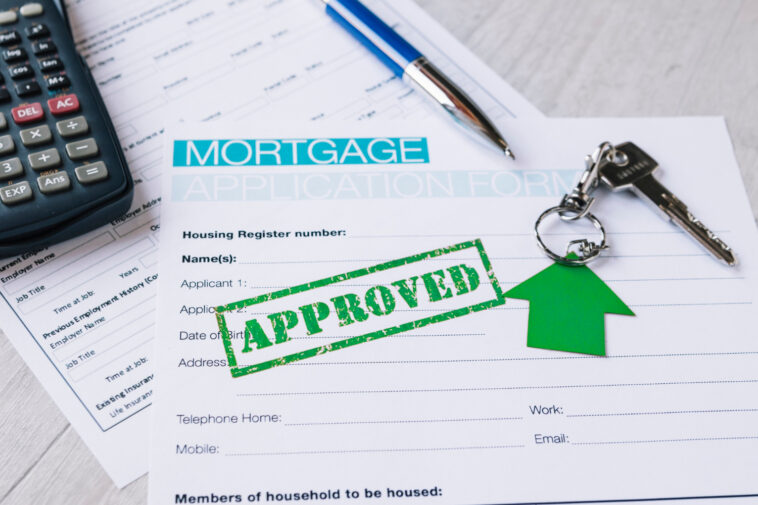
Shopping for a house is an thrilling milestone, however qualifying for a mortgage can really feel daunting. The method of mortgage qualification entails understanding the financial elements that lenders think about, comparable to earnings, credit score rating, debt, and down cost. Figuring out how these components influence your software may help you higher put together and improve your probabilities of approval.
This information breaks down the necessities for mortgage qualification, the several types of mortgage loans, and suggestions to enhance your eligibility, so you’ll be able to really feel assured as you are taking steps towards homeownership.
1. Key Mortgage Qualification Necessities
Lenders consider a number of key elements to find out whether or not you qualify for a mortgage and to evaluate your mortgage phrases. Right here’s a more in-depth have a look at the first standards:
- Credit score Rating: Your credit score rating is among the most crucial elements in mortgage qualification. Most standard loans require a minimal rating of 620, however larger scores (700+) qualify you for higher rates of interest and phrases. FHA loans, that are backed by the federal government, could settle for scores as little as 500 with a bigger down cost.
- Debt-to-Revenue (DTI) Ratio: DTI ratio is a measure of your month-to-month debt obligations in comparison with your gross month-to-month earnings. Lenders want a DTI ratio of 36% or decrease, though some could settle for as much as 43%. A decrease DTI suggests a stronger capacity to handle a mortgage cost.
- Revenue and Employment Historical past: Lenders search for steady, verifiable earnings and customarily want two years of constant employment. Revenue verification can embrace pay stubs, tax returns, and generally employment letters.
- Down Fee: The down cost is the amount of cash you pay upfront towards the acquisition value. Typical loans often require 5-20% down, whereas FHA loans permit for as little as 3.5%. A better down cost can enhance approval odds and should scale back your rate of interest.
- Property and Financial savings: Lenders assess your financial savings and belongings as a monetary cushion, particularly in case of emergencies. These reserves present you will have backup funds in case your earnings fluctuates.
Understanding these standards helps you gauge the place you stand and provides you a place to begin for enhancing your eligibility.
2. Varieties of Mortgage Loans and Their Necessities
A number of mortgage sorts can be found, every with distinctive qualification necessities, which might influence your eligibility and mortgage phrases. Listed here are the principle sorts:
Typical Loans
Typical loans are usually not backed by the federal government and sometimes have stricter necessities. They often require a minimal credit score rating of 620, a DTI ratio under 36%, and a down cost of a minimum of 5%. Debtors with a 20% down cost can keep away from Personal Mortgage Insurance coverage (PMI), which is required on smaller down funds.
FHA Loans
Federal Housing Administration (FHA) loans are government-backed and extra accessible to debtors with decrease credit score scores or restricted funds for a down cost. They permit for scores as little as 500 (with a ten% down cost) or 580 (with a 3.5% down cost) and have larger DTI flexibility.
VA Loans
VA loans, out there to army service members, veterans, and eligible spouses, supply vital advantages, comparable to zero down cost and no PMI. These loans are backed by the Division of Veterans Affairs and customarily require a credit score rating of 580 or larger, although necessities fluctuate by lender.
USDA Loans
USDA loans are designed for low-to-moderate-income debtors buying in eligible rural or suburban areas. These loans require no down cost and sometimes require a credit score rating of a minimum of 640. Revenue limits apply primarily based on the applicant’s space, and property eligibility is set by the USDA.
Jumbo Loans
Jumbo loans are used for financing high-priced properties that exceed conforming mortgage limits (sometimes over $726,200 in most areas). These loans require robust credit score (often 700+), the next down cost (a minimum of 10-20%), and a low DTI ratio, as they contain extra danger for lenders.
Understanding which mortgage sort most accurately fits your state of affairs can simplify the mortgage qualification course of and aid you put together for particular lender necessities.
3. Easy methods to Calculate Your Debt-to-Revenue Ratio
Your DTI ratio is an important think about mortgage qualification. Right here’s easy methods to calculate it:
- Add Up Month-to-month Debt Funds: Embody all month-to-month debt obligations, comparable to bank card funds, automotive loans, scholar loans, and different loans.
- Divide by Gross Month-to-month Revenue: Divide your whole month-to-month debt funds by your gross (pre-tax) month-to-month earnings.
- Convert to Share: Multiply the consequence by 100 to get your DTI ratio as a share.
For instance, in case your month-to-month debt funds whole $1,500 and your gross month-to-month earnings is $5,000, your DTI ratio could be:
DTI Ratio = (1,500 / 5,000) x 100 = 30%
With a DTI ratio of 30%, you’ll usually be nicely inside the popular vary for mortgage qualification.
4. Tricks to Enhance Your Mortgage Qualification Probabilities
If you happen to’re not at present assembly mortgage qualification necessities, there are steps you’ll be able to take to enhance your eligibility. Listed here are some actionable suggestions:
- Enhance Your Credit score Rating: Pay down excellent money owed, make well timed funds, and scale back bank card balances. Checking your credit score report for errors and disputing them may also enhance your rating.
- Decrease Your Debt-to-Revenue Ratio: Decreasing present debt or rising earnings (comparable to by a part-time job) can decrease your DTI ratio. Lenders usually want a DTI under 36% for standard loans.
- Save for a Bigger Down Fee: Growing your down cost quantity can enhance your approval possibilities and should scale back your month-to-month cost. A 20% down cost on a traditional mortgage additionally eliminates the necessity for PMI.
- Improve Financial savings and Reserves: Displaying substantial money reserves reassures lenders that you’ve backup funds. Goal to have a minimum of 2-3 months’ value of mortgage funds in financial savings.
- Keep Regular Employment: Lenders search for steady employment over the previous two years. Altering jobs often or lately switching careers can increase questions for lenders, so attempt to show constant earnings.
Making these changes cannot solely enhance your approval odds however can also result in extra favorable mortgage phrases, saving you cash in the long term.
5. Getting Pre-Accepted vs. Pre-Certified for a Mortgage
Many patrons ponder whether they need to search pre-approval or pre-qualification when beginning their dwelling search. Right here’s a fast have a look at the variations:
Pre-Qualification
Pre-qualification is a preliminary evaluation of your monetary state of affairs primarily based on data you present, comparable to earnings, belongings, and debt. It’s often a fast course of and offers an estimate of how a lot you’ll be able to borrow. Nonetheless, pre-qualification doesn’t contain a radical credit score or monetary overview and isn’t a assure of mortgage approval.
Pre-Approval
Pre-approval is a extra complete overview of your monetary state of affairs, together with a credit score examine and verification of earnings and belongings. A pre-approval letter is an official doc from the lender stating the mortgage quantity you’re authorised for, and it’s legitimate for a specified interval (often 60 to 90 days). Pre-approval strengthens your place as a purchaser and exhibits sellers you’re a severe candidate.
Whereas pre-qualification is usually a useful first step, acquiring pre-approval offers a clearer image of your finances and makes you extra aggressive within the housing market.
6. Easy methods to Select the Proper Lender
Choosing the proper lender is important to making sure a easy mortgage course of and getting favorable phrases. Listed here are some suggestions for choosing the right lender:
- Evaluate Charges and Charges: Totally different lenders supply various rates of interest and payment buildings. Receive quotes from a number of lenders to seek out the very best price and lowest charges.
- Verify Mortgage Merchandise: Search for lenders providing the particular mortgage sort you want, whether or not that’s an FHA mortgage, VA mortgage, jumbo mortgage, or standard mortgage.
- Contemplate Buyer Service: Mortgage processes may be advanced, so select a lender with a repute for good customer support and responsiveness.
- Consider Mortgage Phrases: Evaluate phrases like rates of interest, closing prices, and reimbursement flexibility to seek out the very best total supply to your finances.
- Learn Critiques: On-line evaluations present insights into previous buyer experiences, serving to you gauge lender reliability and repair high quality.
With cautious analysis and comparability, you will discover a lender who meets your wants and makes the mortgage qualification course of as seamless as attainable.
Conclusion
Qualifying for a mortgage is a multi-step course of that requires monetary planning and preparation. By understanding the principle qualification standards, kinds of mortgage loans, and methods to enhance your eligibility, you’ll be able to take proactive steps to make the mortgage course of smoother and extra profitable.
Whether or not you’re a first-time homebuyer or a seasoned investor, understanding what lenders search for can enhance your probabilities of approval and doubtlessly prevent cash by higher mortgage phrases. With the correct preparation and planning, you’ll be nicely in your approach to securing a mortgage and transferring into your dream dwelling.
FAQ
What’s the minimal credit score rating wanted for a mortgage?
Most standard loans require a minimal credit score rating of 620, whereas FHA loans can settle for scores as little as 500 with a bigger down cost. A better rating (700+) will increase approval possibilities and should qualify you for higher charges.
How a lot down cost do I want for a mortgage?
Down funds fluctuate by mortgage sort. Typical loans sometimes require 5-20% down, whereas FHA loans require a minimal of three.5%. VA and USDA loans could not require a down cost if eligibility standards are met.
How does my debt-to-income ratio have an effect on mortgage qualification?
Lenders want a DTI ratio of 36% or decrease, although some could settle for as much as 43%. A decrease DTI ratio signifies a stronger capacity to handle new debt and may enhance your mortgage qualification possibilities.
Is it higher to get pre-qualified or pre-approved for a mortgage?
Pre-approval is extra thorough and entails a credit score examine and earnings verification, offering a stronger assure of mortgage approval. Pre-qualification is much less detailed and is usually used as an preliminary evaluation.
Can I qualify for a mortgage with a low earnings?
Sure, it’s attainable to qualify for a mortgage with a decrease earnings, notably with FHA or USDA loans. A decrease DTI ratio, robust credit score rating, and extra belongings may also assist enhance your possibilities.